
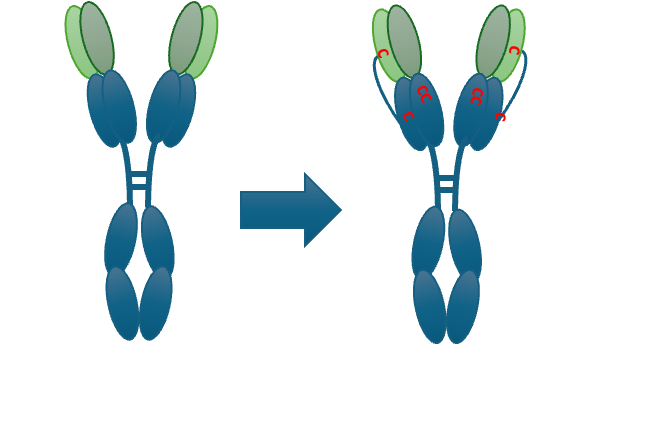
Every antibody campaign we run — now on one menu
From de novo discovery to picomolar lead engineering, browse the exact service your project needs. Each one is a workflow we've actually run, with the data to prove it. Flexible terms, no downstream royalties.
Abwiz Bio offers 22 custom antibody discovery and engineering services from one San Diego lab: rabbit monoclonal and VHH discovery, phospho-, hapten- and anti-idiotype antibodies, STEM™ affinity maturation from nanomolar to picomolar KD, and antibody humanization across species — every service is a workflow we have run, with published data behind it.
Pick your starting point
Have only a target? Start in Discovery. Already have a lead sequence? Jump to Engineering. Need a hard-to-make specificity — phospho, hapten, glycan, anti-idiotype? Those are in Discovery too. Every service below is scoped individually and quoted on request.
No sequence, no antibody yet. We raise a brand-new mAb or VHH from your target antigen, cells, or tissue using patented WizAmp™ phage display.
Rabbit mAb Discovery (RabWiz™)
De novo rabbit monoclonals for your toughest targets.
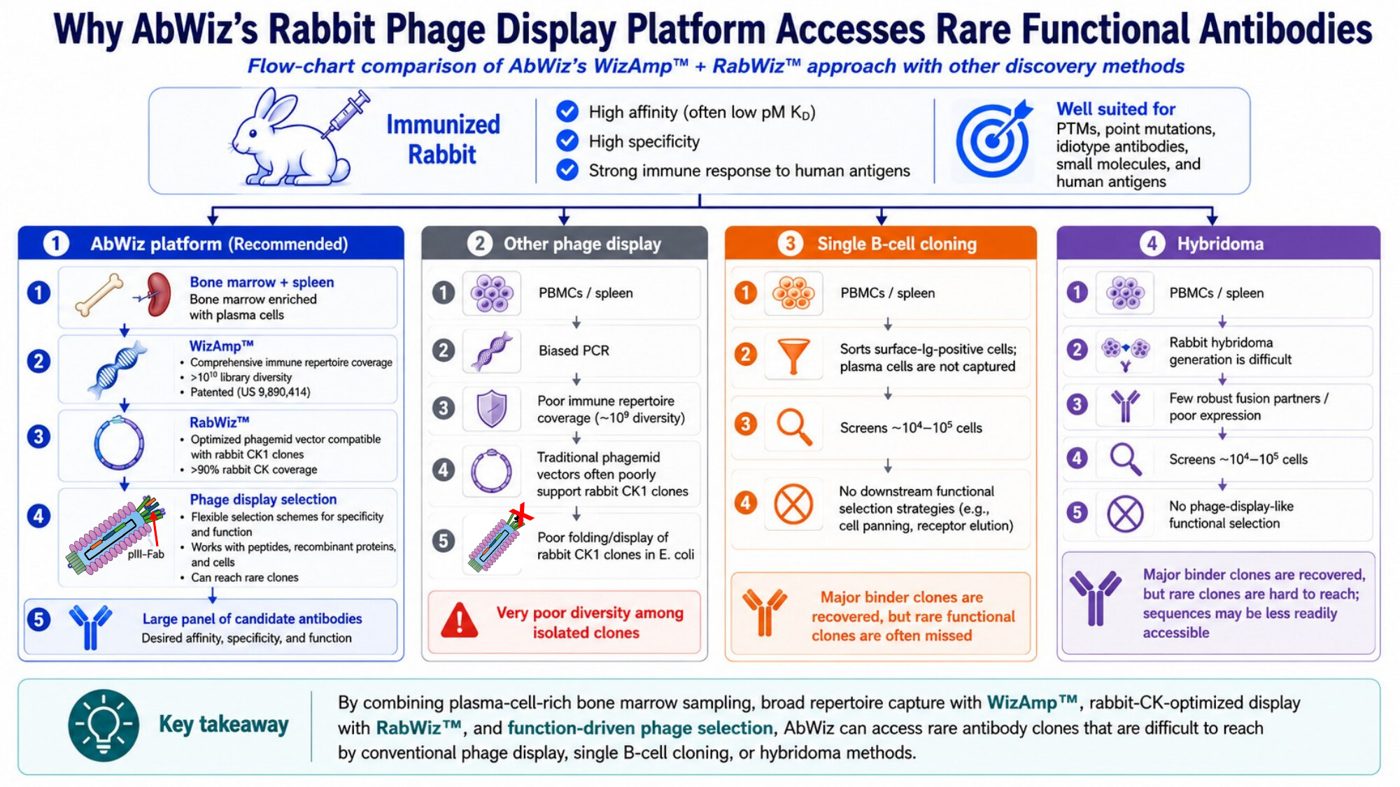 See the data →Rabbit phage display accesses rare functional antibodiesRequest a Quote
VHH / Single-Domain (Nanobody) Discovery
Camelid single-domain antibodies for hidden epitopes.
Membrane & Difficult-Antigen Discovery
Cell-based panning for targets you cannot express as a recombinant protein.
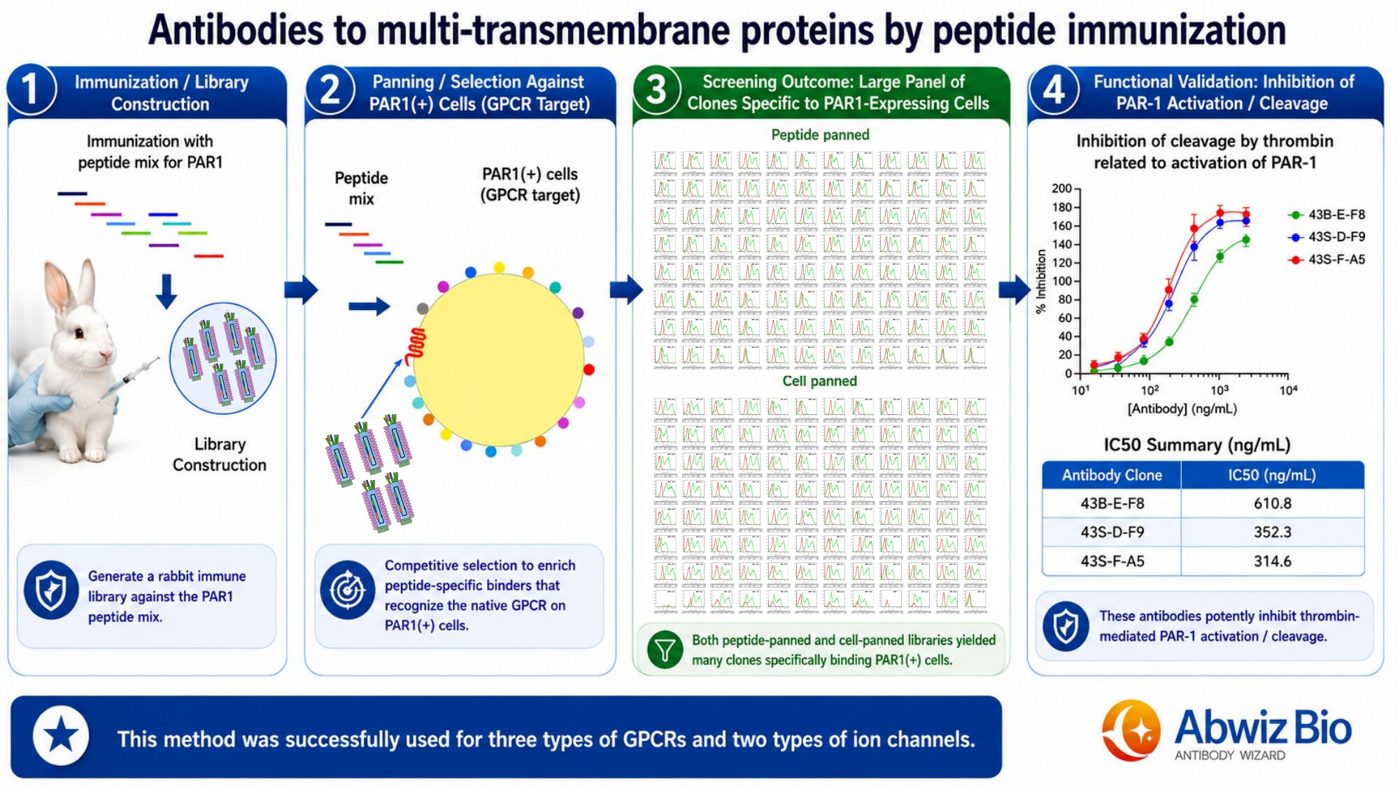 See the data →Antibodies to multi-transmembrane proteins by peptide immunizationRequest a Quote
Functional / Neutralizing Antibody Discovery
Find the clones that actually move your function.
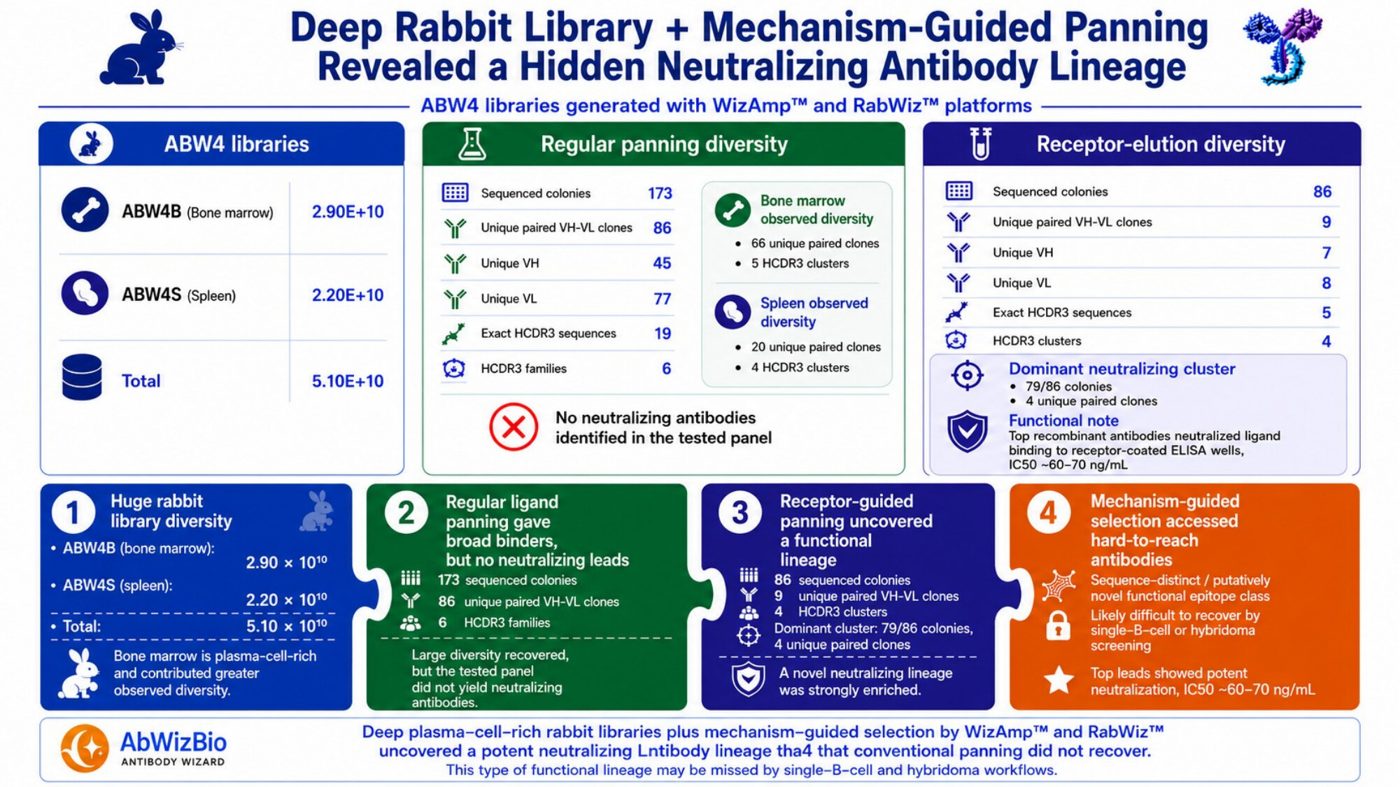 See the data →Mechanism-guided panning reveals a hidden neutralizing lineageRequest a Quote
Small-Molecule / Hapten Antibody
Antibodies to targets too small to be immunogenic — even in samples full of cross-reactive look-alikes.
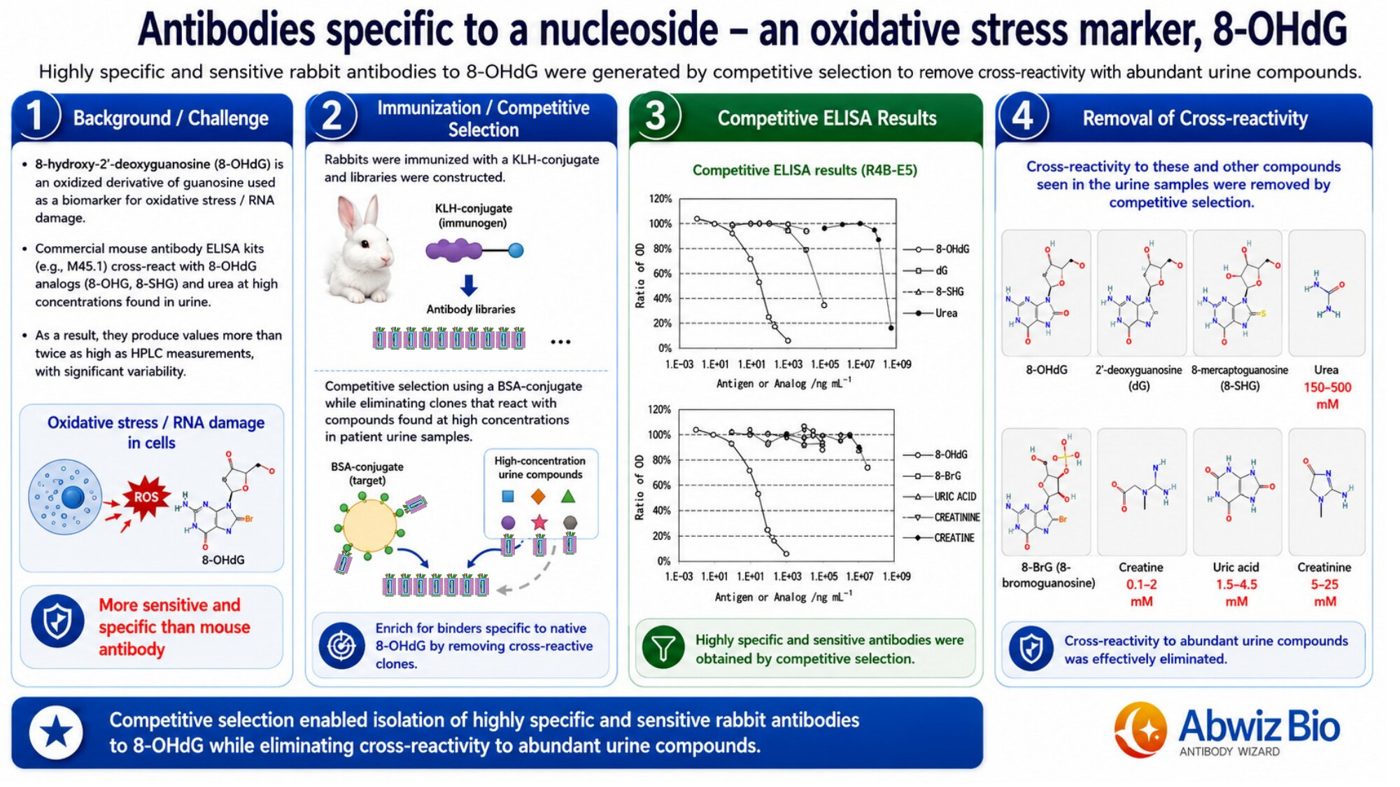 See the data →Antibody to a small-molecule oxidative-stress marker (8-OHdG)Request a Quote
Anti-Idiotype Antibody
Antibodies that recognize your drug's variable region.
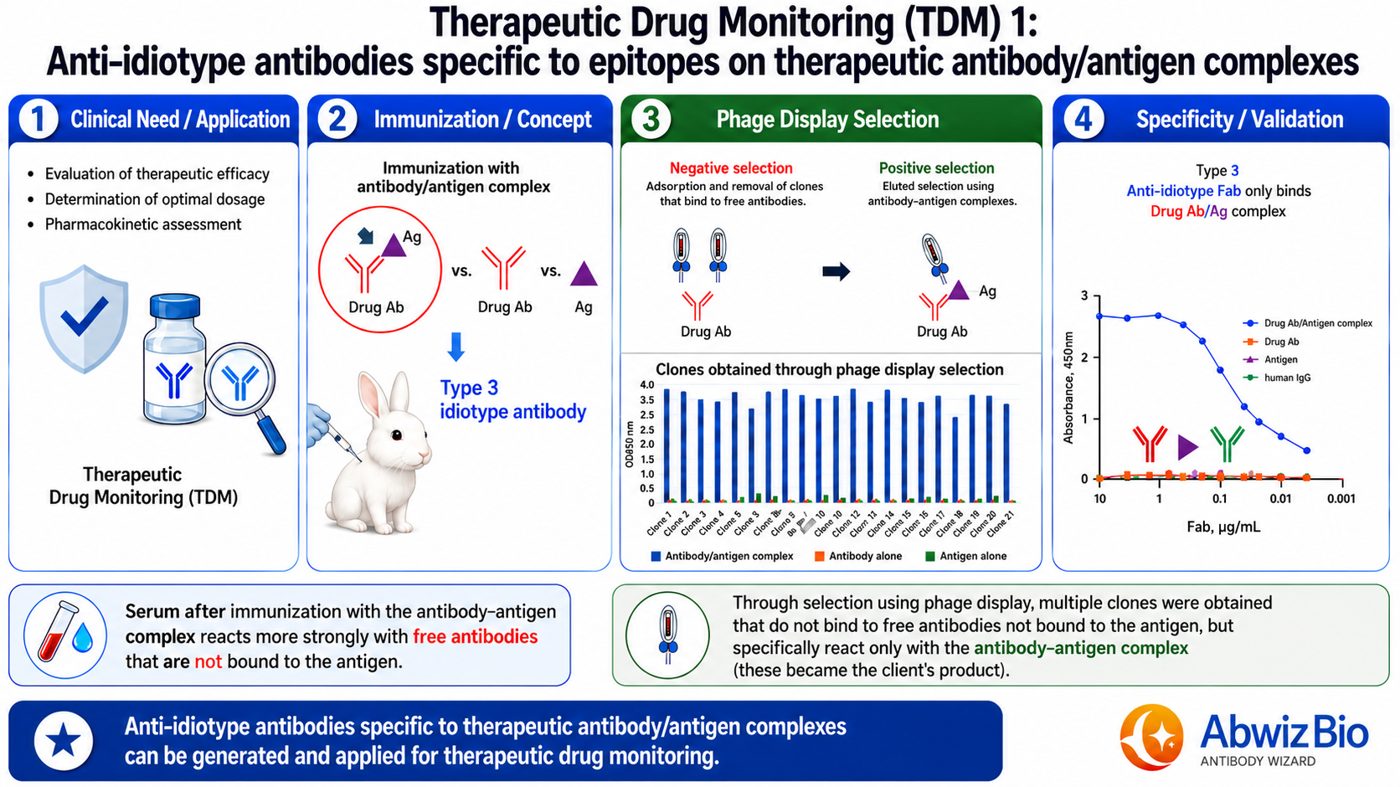 See the data →Anti-idiotype antibodies for therapeutic drug monitoringRequest a Quote
Phospho / PTM-Specific Antibody (pS-Wiz)
Monoclonals specific to a single phospho-site.
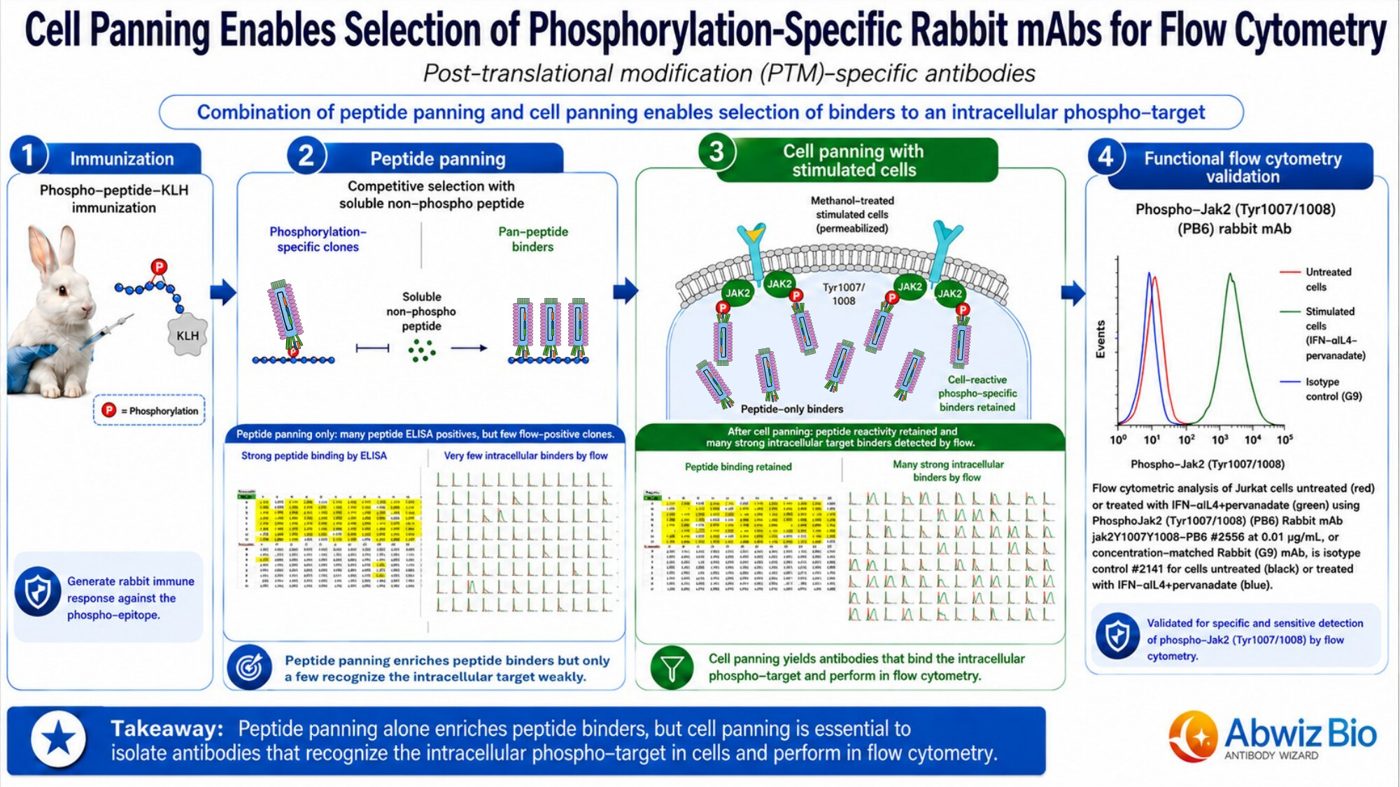 See the data →Cell panning selects phosphorylation-specific rabbit mAbsRequest a Quote
Carbohydrate / Glycan & Sulfation Antibody
Specificity against sugars, glycans, and sulfation.
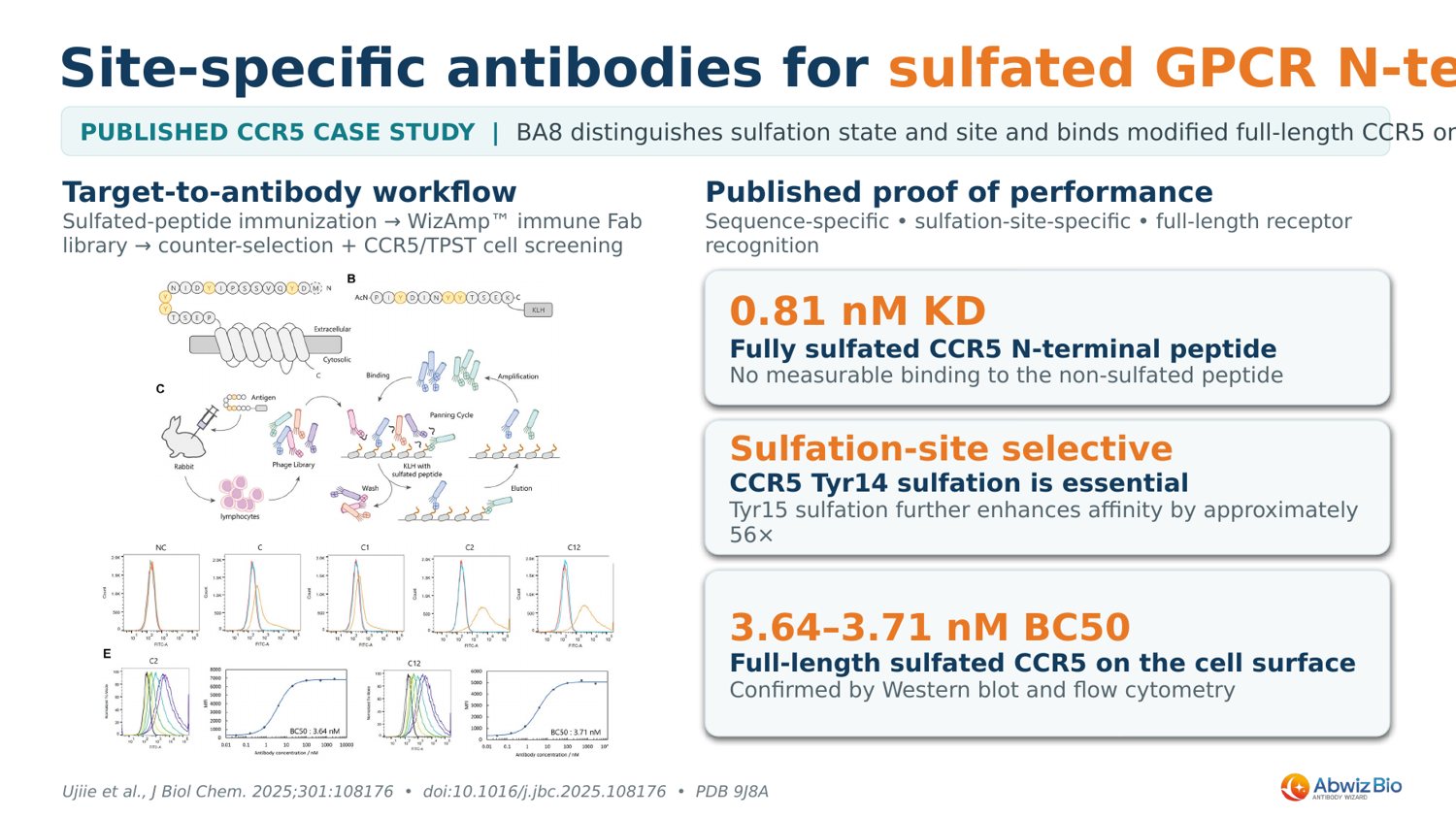 See the data →Site-specific antibodies for sulfated GPCR N-termini (CCR5, J Biol Chem 2025)Request a Quote
Send us an amino-acid sequence. We re-engineer it for affinity, kinetics, specificity, developability, or format — with benchtop selection, not in-silico guesses alone.
Affinity Maturation (STEM™)
Drive your lead into picomolar KD.
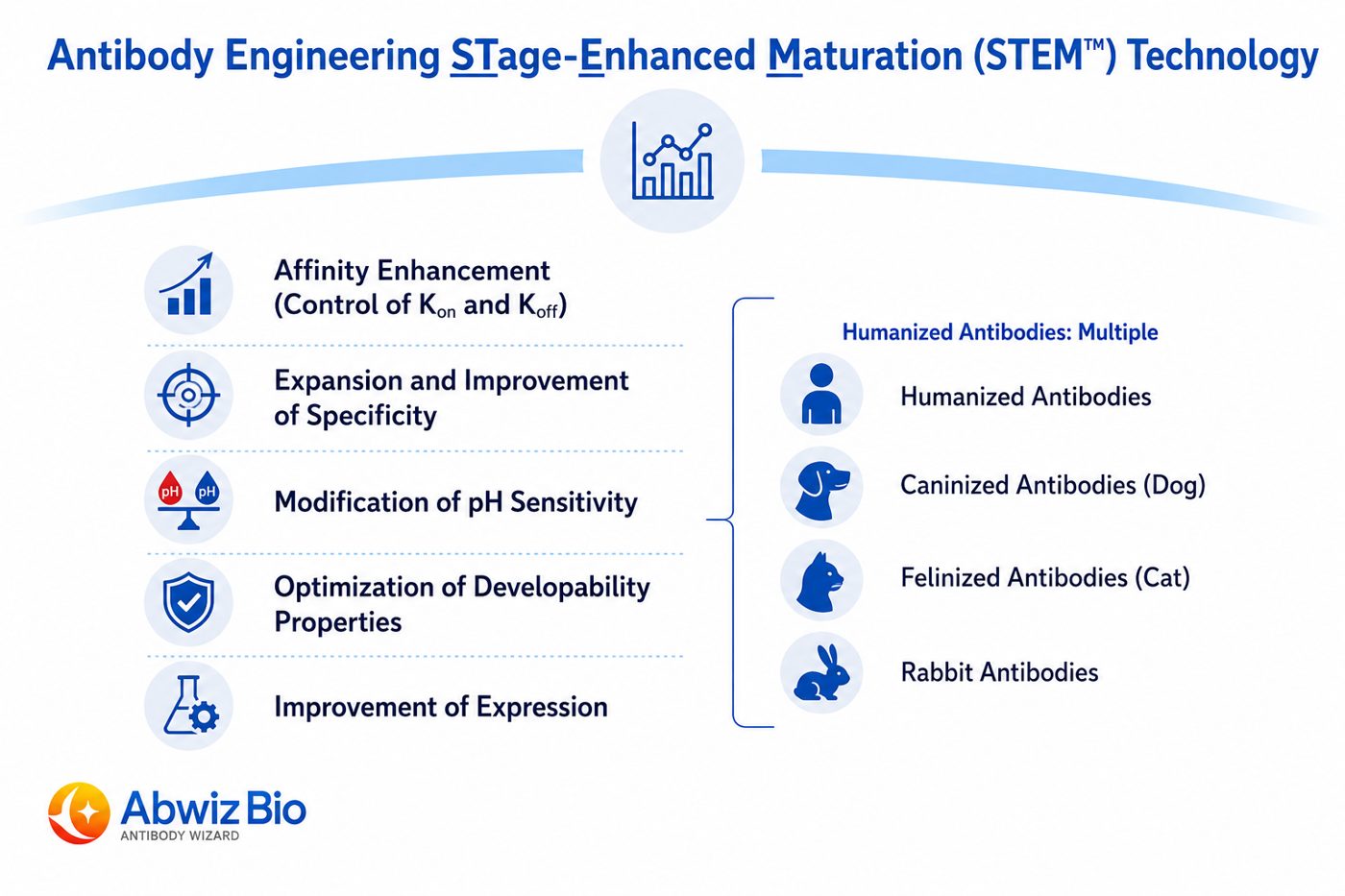 See the data →STage-Enhanced Maturation (STEM) technologyRequest a Quote
Affinity Attenuation / De-tuning
Deliberately dial affinity down into a target window.
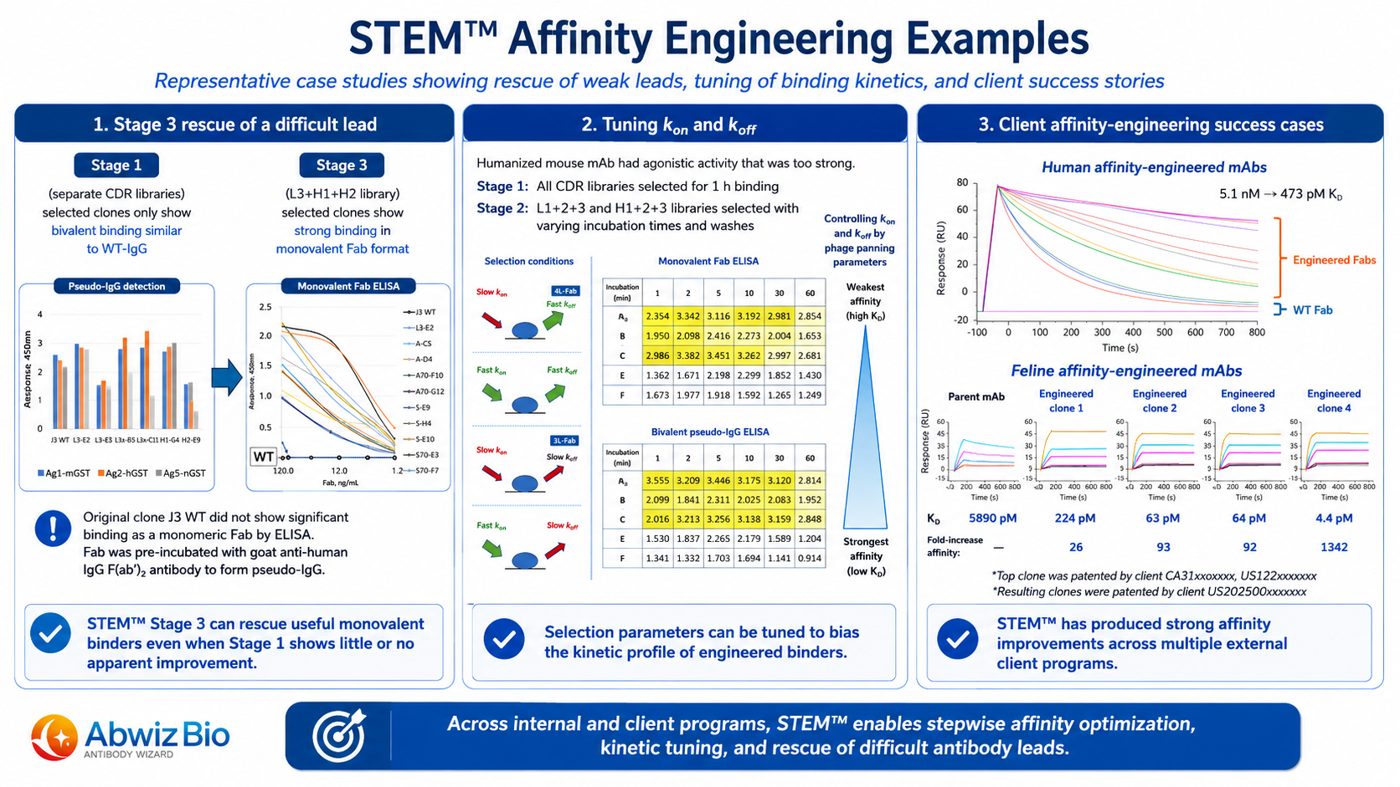 See the data →STEM affinity-engineering examplesRequest a Quote
Avidity Engineering
Separate monovalent affinity from avidity.
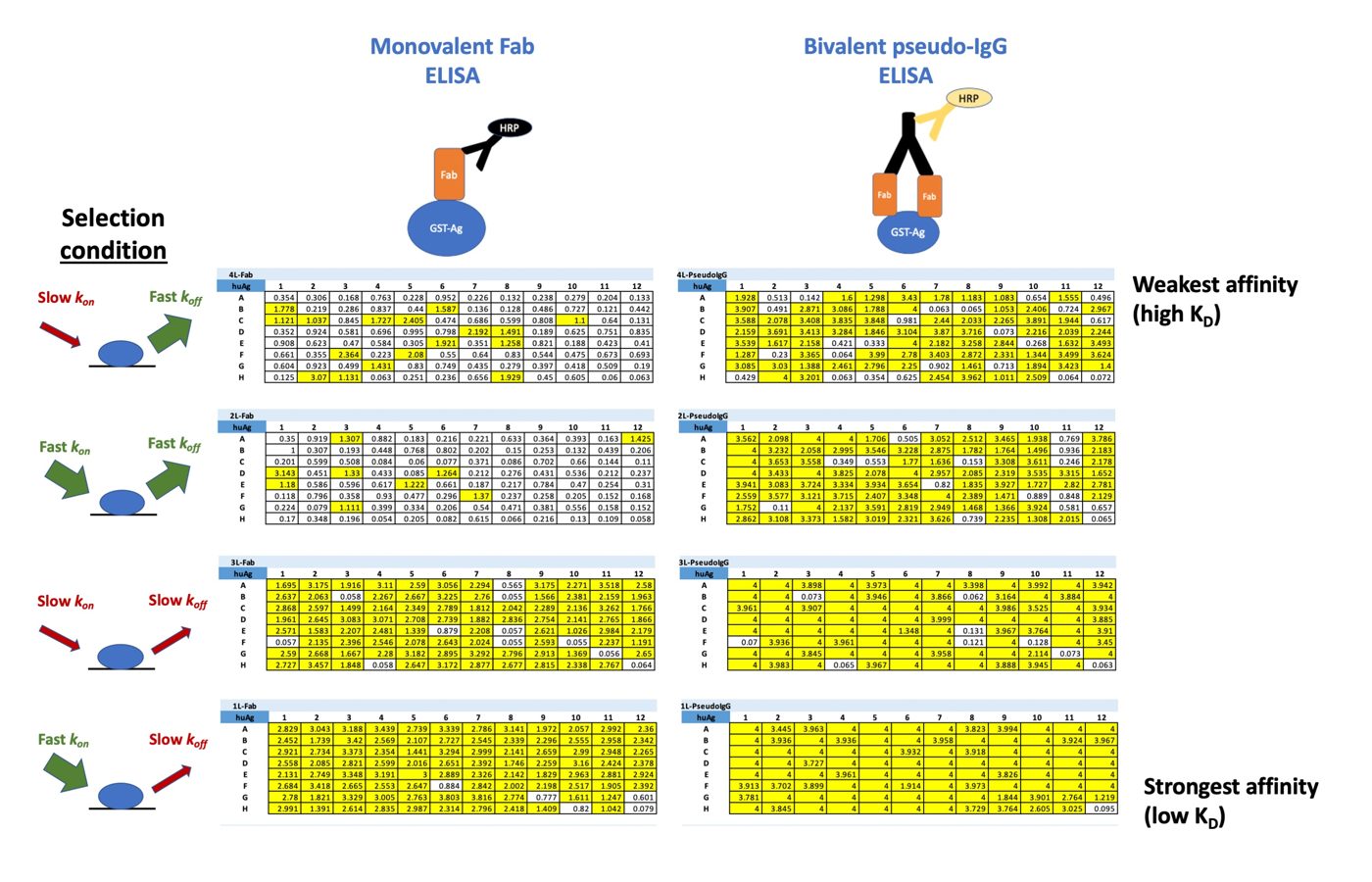
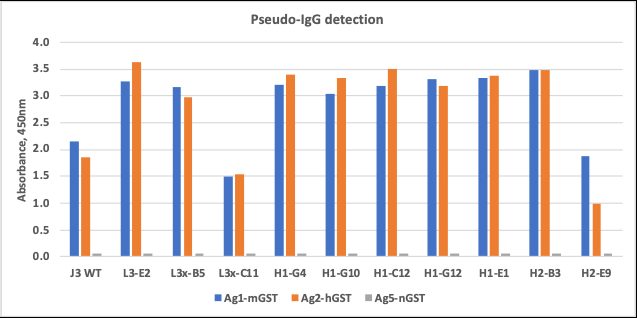 See the data →Avidity engineering: monovalent Fab vs bivalent pseudo-IgGRequest a Quote
Kinetic Tuning (on-/off-rate)
Target on-rate and off-rate independently.
pH-Sensitivity / Recycling Engineering
Antibodies that release antigen at pH ~6.
Thermostability Engineering
Select for heat-stable clones under stress.
Developability Optimization
Strip out aggregation, viscosity, and liabilities.
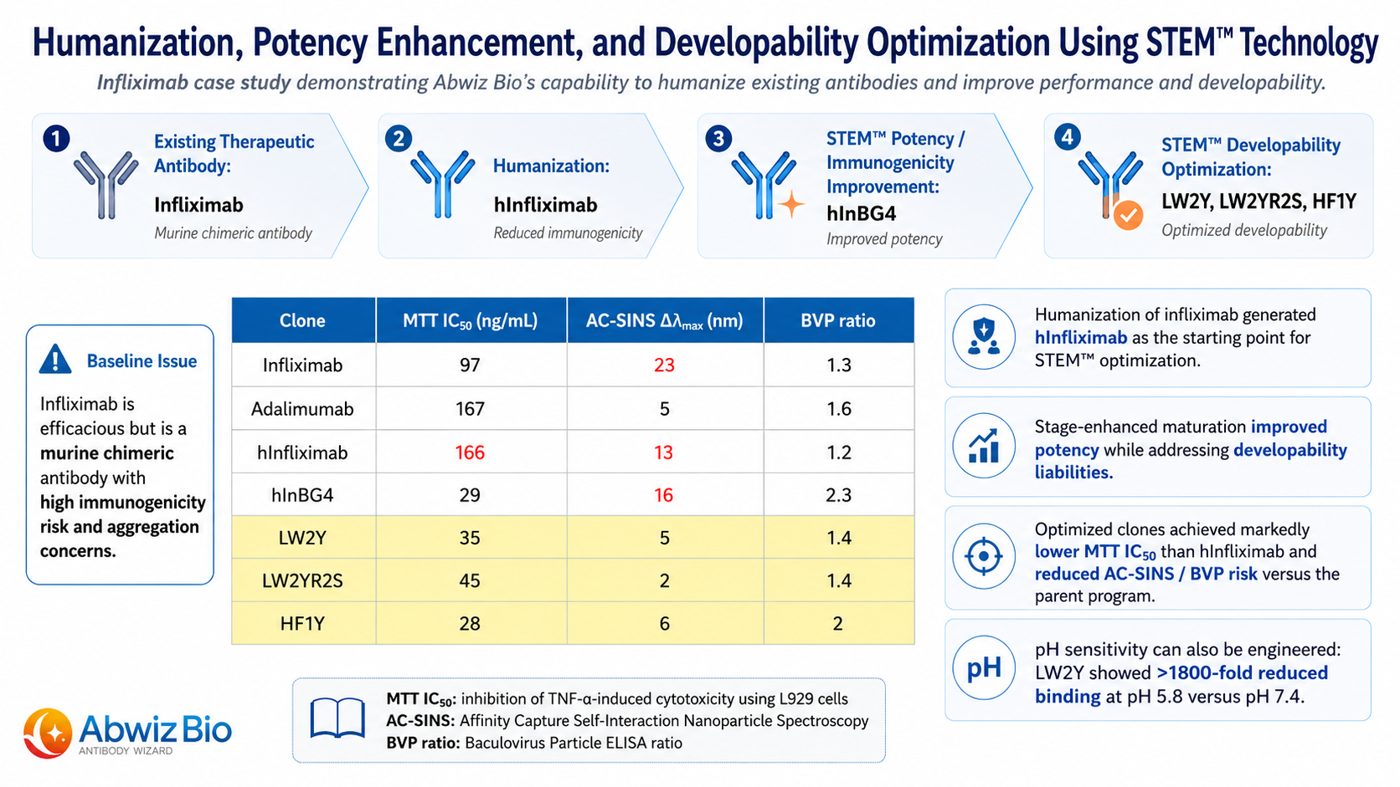 See the data →Developability assessment and improvementRequest a Quote
Expression / Titer Rescue
Fix a functional antibody that will not express.
Cross-Species Reactivity Engineering
Add cyno / mouse cross-reactivity to a lead.
Mouse mAb Humanization
Humanize a mouse lead without losing function.
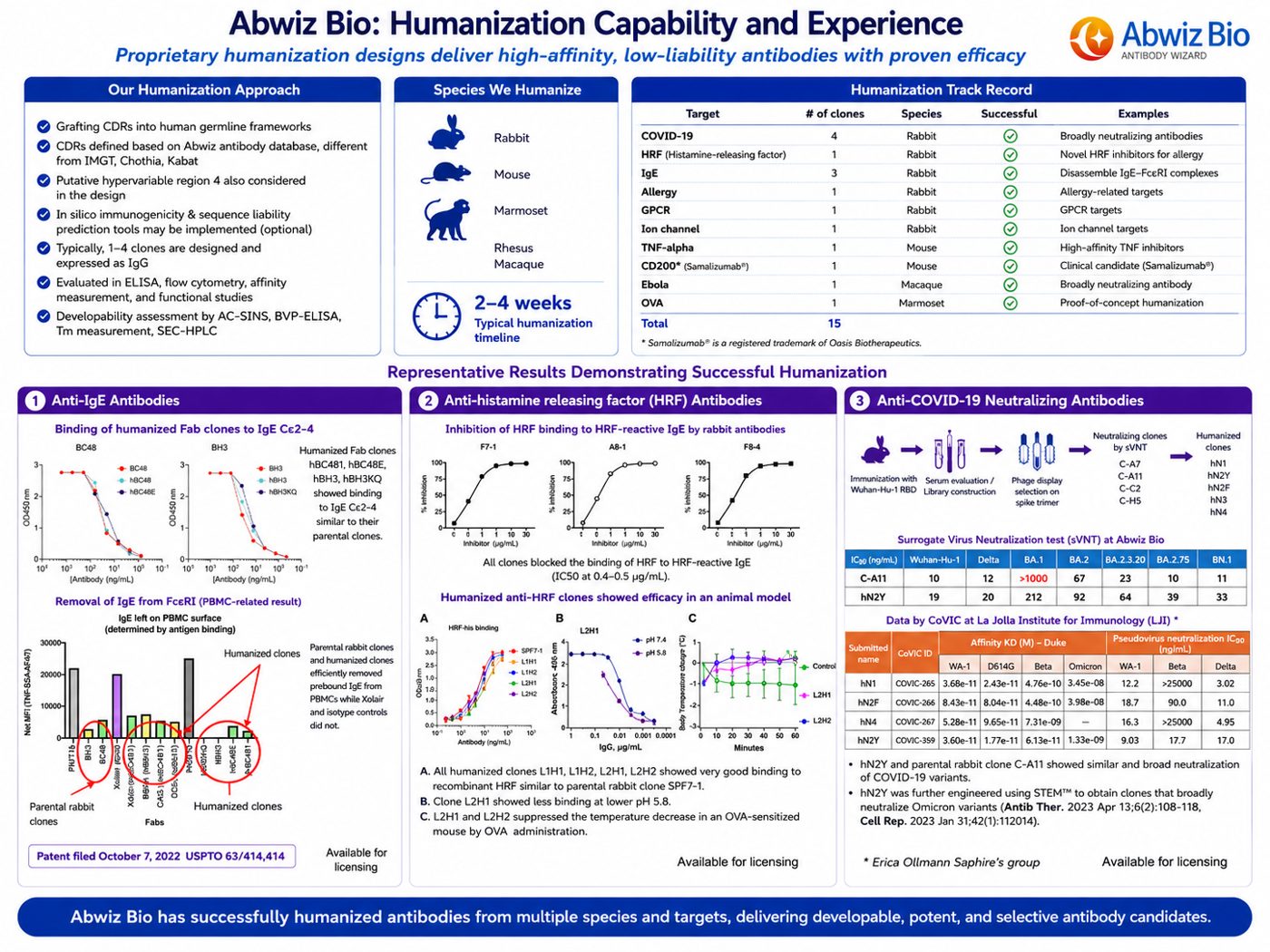 See the data →Humanization capability and experienceRequest a Quote
Rabbit mAb Humanization
Humanize high-affinity rabbit leads (our home turf).
Llama / Alpaca (VHH) Humanization
Humanize camelid VHH domains.
Chimeric Antibody Generation
Fuse your variable region to human constant.
Feline / Veterinary Antibody Engineering
Engineer antibodies for animal-health targets.
How an engagement works
Scope the campaign
Tell us your target or send your sequence. We define deliverables, timeline, and success criteria up front.
Design & build
AI-guided CDR design plus WizAmp™ library construction, diversity up to >1010.
Select & screen
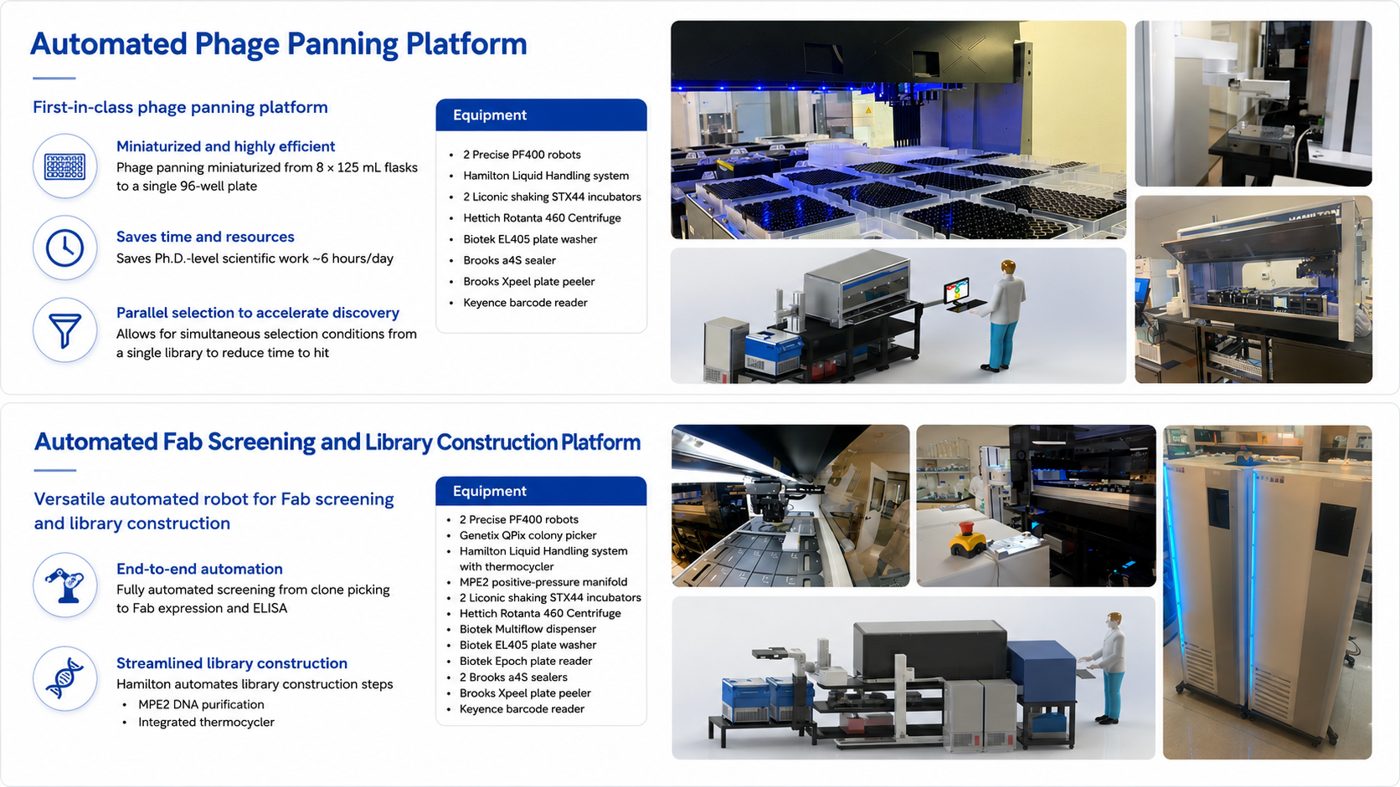
Phage panning with stringency, stability and polyreactivity filters. Fabs screened in 96-well before IgG.
Characterize & deliver
ELISA, flow, and BLI data (optional), plus full sequences and clone data.
Frequently asked questions
What antibody discovery services does Abwiz Bio offer?
Abwiz Bio provides de novo discovery of rabbit monoclonal antibodies (RabWiz™), VHH / single-domain antibodies, membrane and difficult-antigen antibodies via cell-based panning, and functional/neutralizing antibodies. We also specialize in hard-to-raise specificities: phospho/PTM, anti-idiotype, hapten/small-molecule, and glycan antibodies. Every campaign uses our patented WizAmp™ phage display platform.
How much affinity improvement can affinity maturation achieve?
Our STEM™ platform has delivered 1,338-fold affinity improvement, reaching KD as low as 4.4 pM even when starting from low-nanomolar leads. Because we pair AI-guided library design with benchtop directed evolution, each engineered clone also passes stability and polyreactivity filters, so it is developability-ready.
How do IP and commercial terms work?
IP and commercial terms are flexible and agreed before the project starts, and our engagements carry no downstream royalties. We tailor terms to your program rather than applying a one-size-fits-all model.
Can you humanize mouse, rabbit or VHH antibodies?
Yes. We humanize mouse, rabbit, and llama/alpaca (VHH) antibodies by CDR grafting onto human germline frameworks, then restore affinity through Vernier-residue back-mutation and, when needed, STEM™ affinity maturation. Our humanization success rate is 15/15.
What data do I receive at the end of a project?
Deliverables depend on the service but typically include full VH/VL sequences, recombinant IgG or VHH, and characterization by ELISA and flow cytometry, with BLI binding data optional after IgG purification, plus functional assay data on request.
Can I start mid-workflow if I already have a lead antibody?
Absolutely. Discovery, humanization, and each engineering service can be run standalone. If you already have a lead, send the amino-acid sequence and we begin directly at affinity maturation, developability, expression rescue, or format engineering.
The science behind the menu
Representative data and workflows from our own campaigns. Click any panel to enlarge.
Rabbit phage display accesses rare functional antibodies
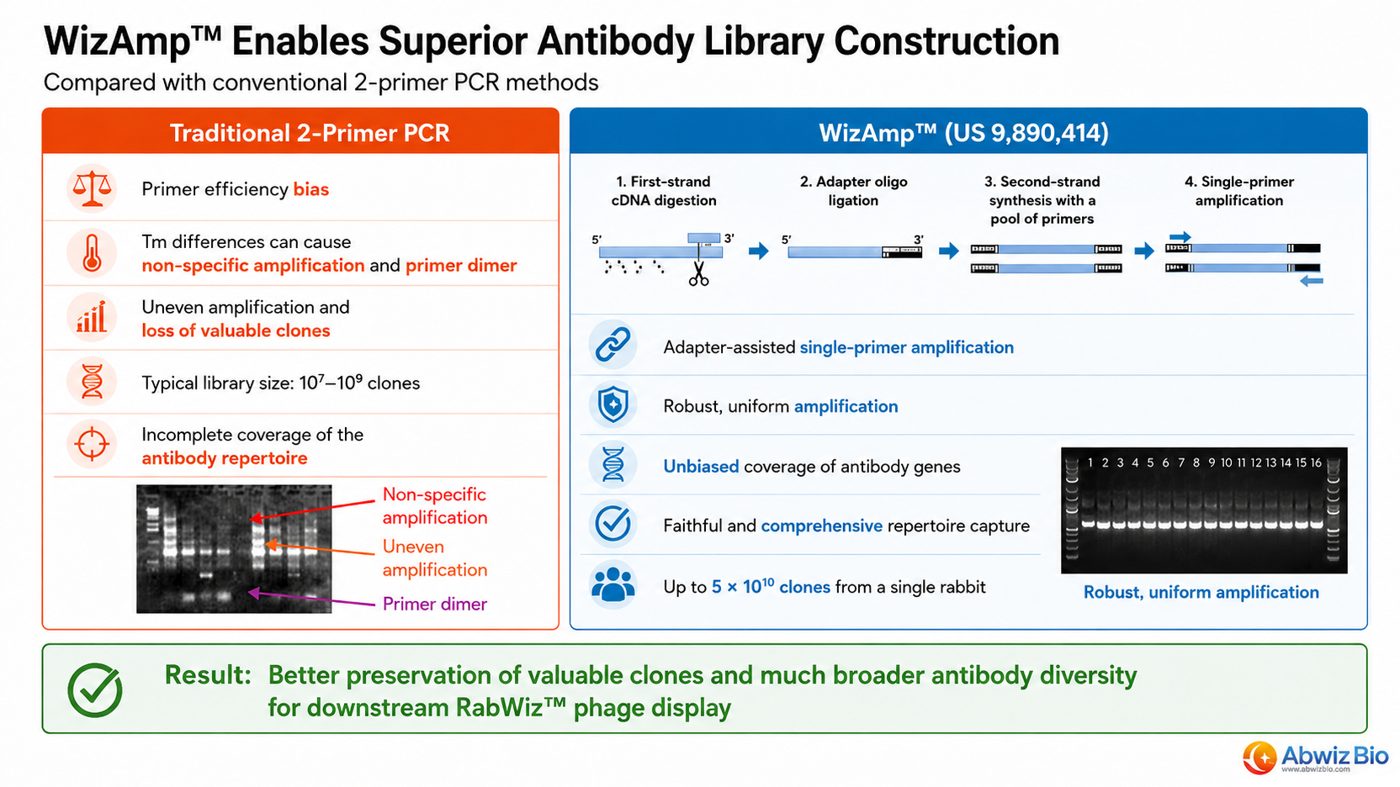
WizAmp™ enables superior antibody library construction
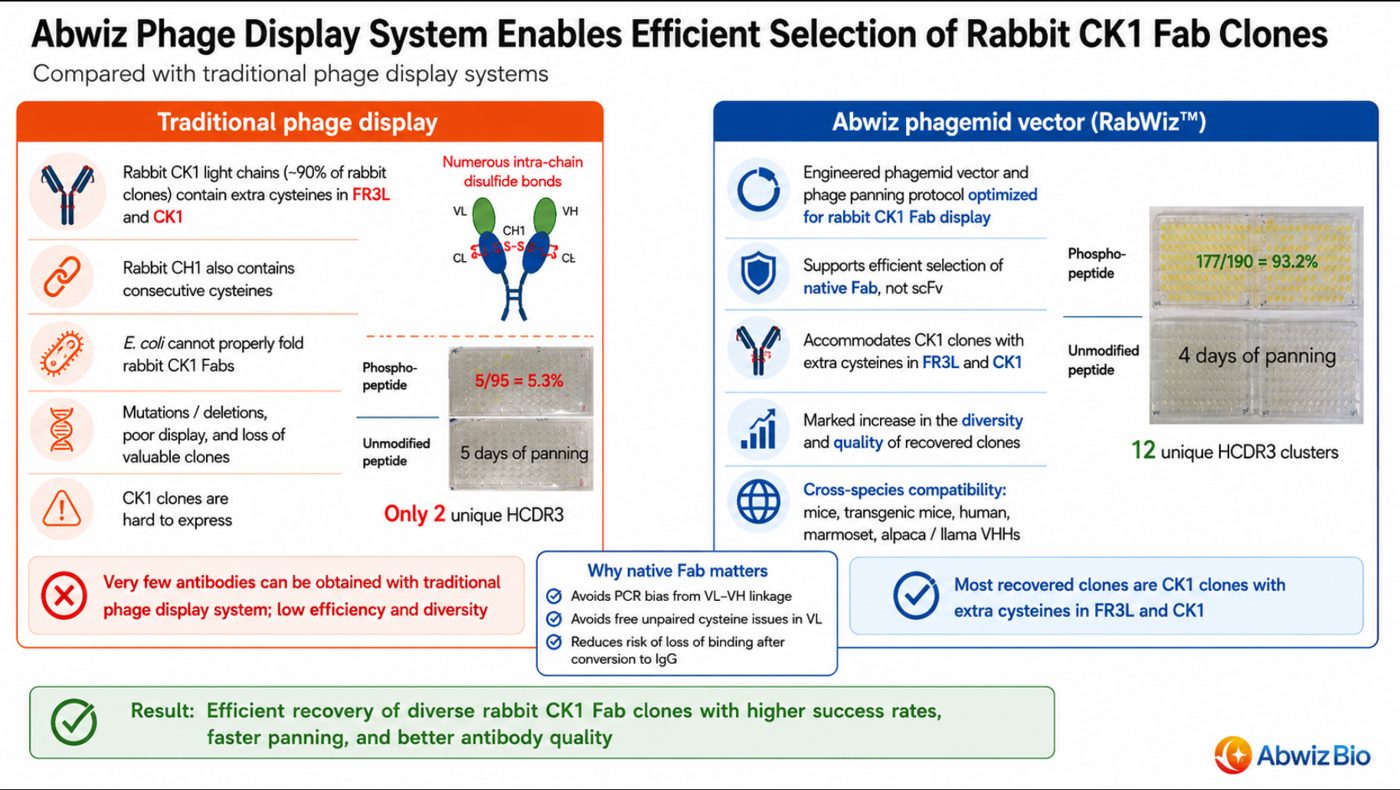
Efficient selection of rabbit CK1 Fab clones
Mechanism-guided panning reveals a hidden neutralizing lineage
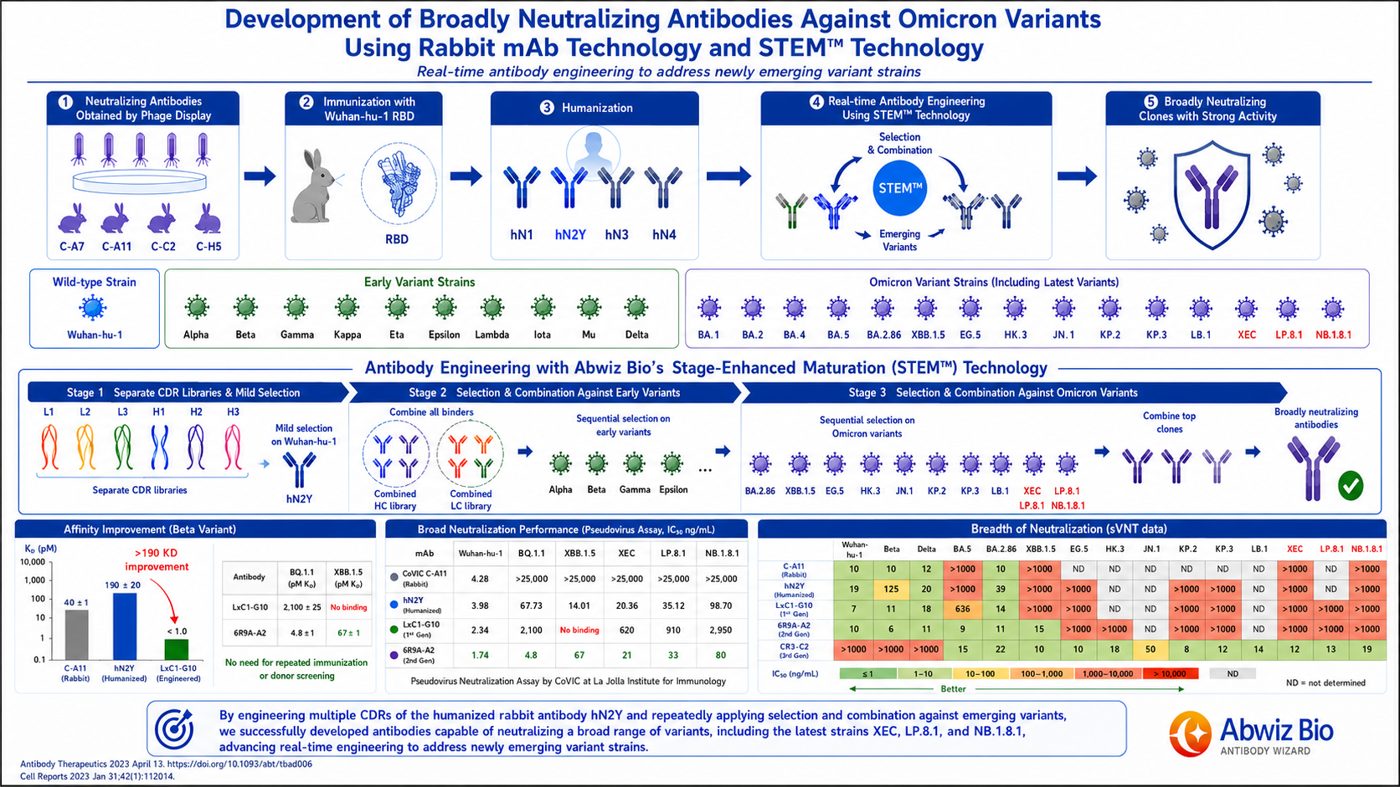
Broadly neutralizing anti-Omicron antibodies via rabbit + STEM™
Cell panning selects phosphorylation-specific rabbit mAbs
Antibodies to multi-transmembrane proteins by peptide immunization
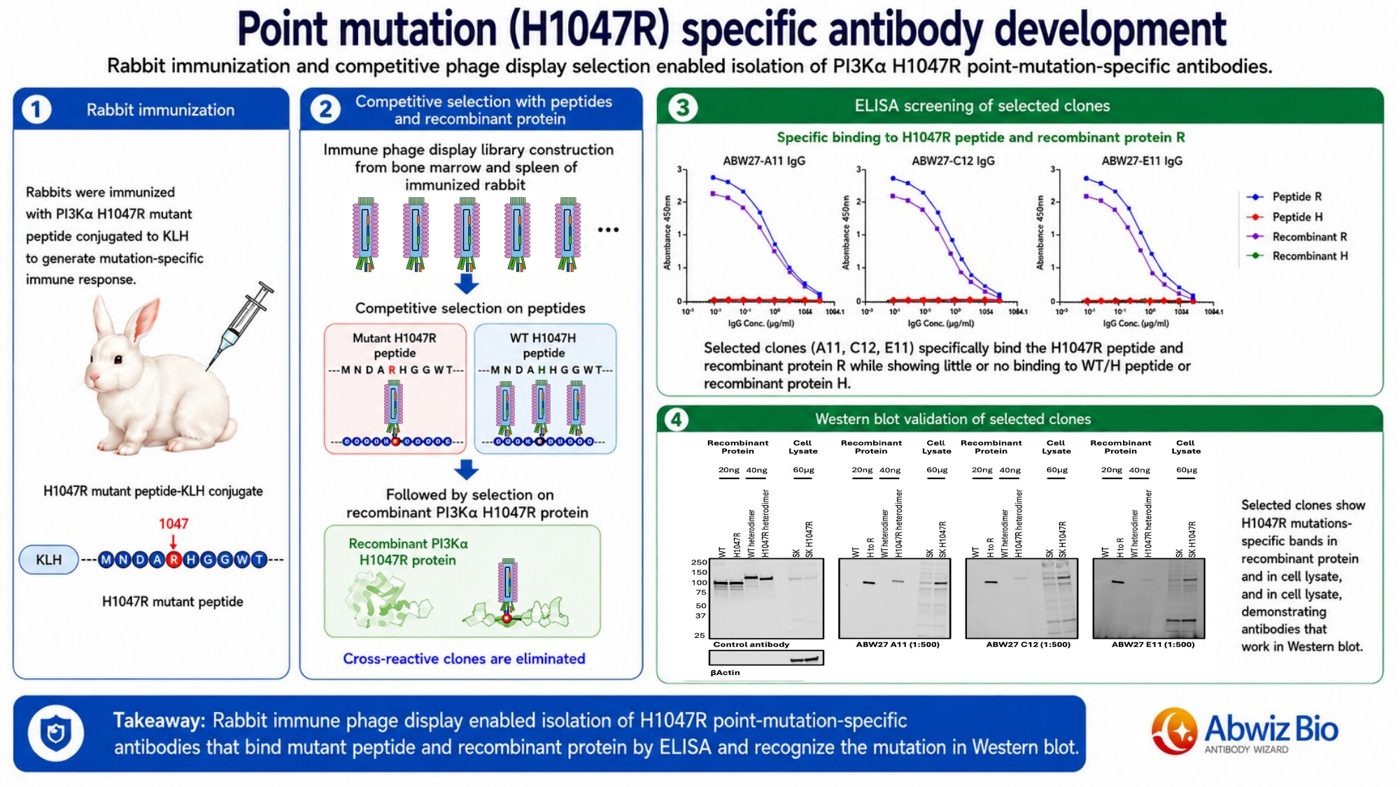
Point-mutation (H1047R)-specific antibody development
Antibody to a small-molecule oxidative-stress marker (8-OHdG)
Anti-idiotype antibodies for therapeutic drug monitoring
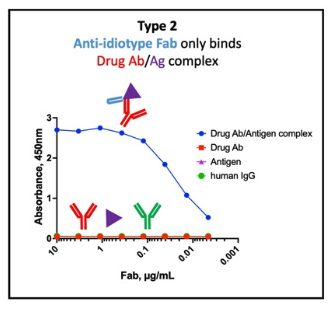
Anti-idiotype Fab that only binds the drug–antigen complex
Site-specific antibodies for sulfated GPCR N-termini — CCR5 (J Biol Chem 2025)
STage-Enhanced Maturation (STEM™) technology
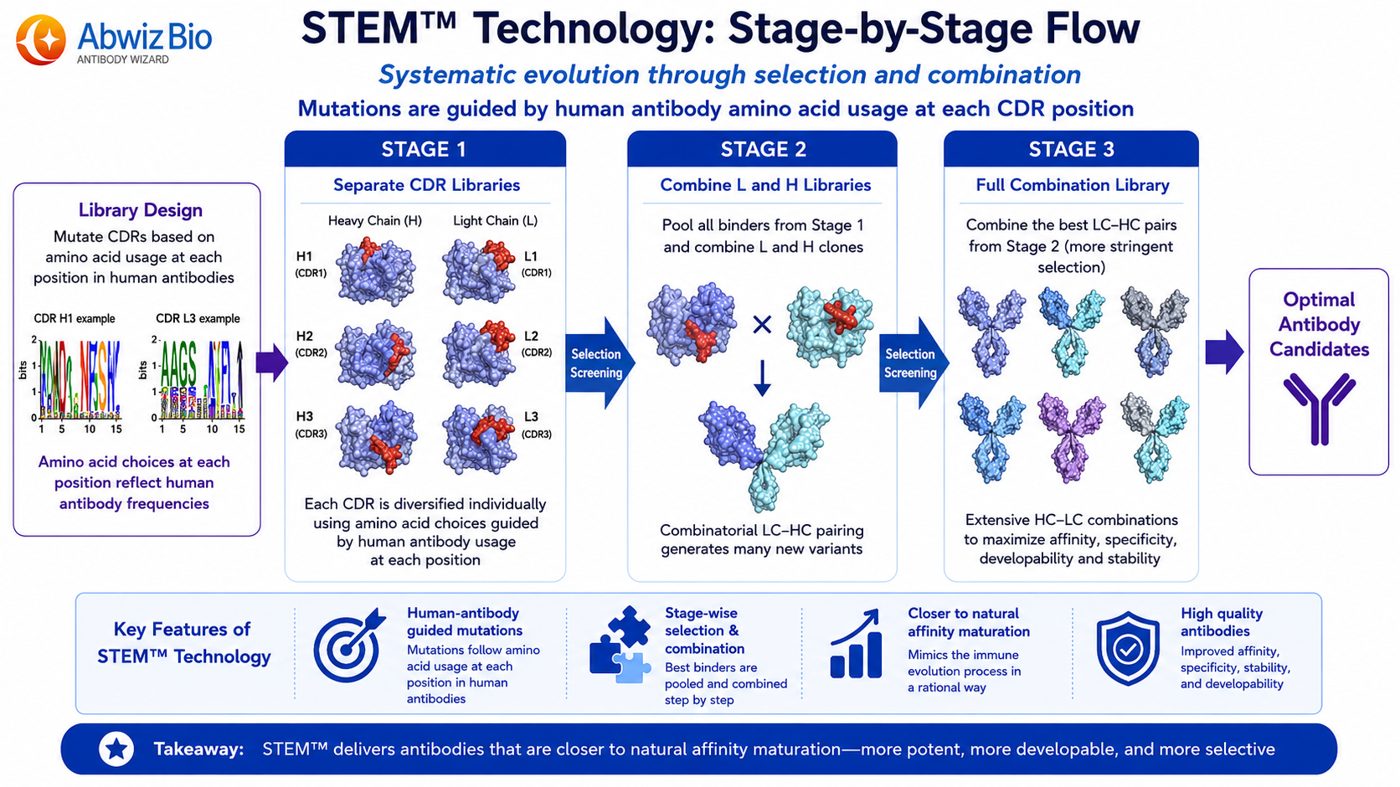
STEM™ stage-by-stage selection flow
STEM™ affinity-engineering examples
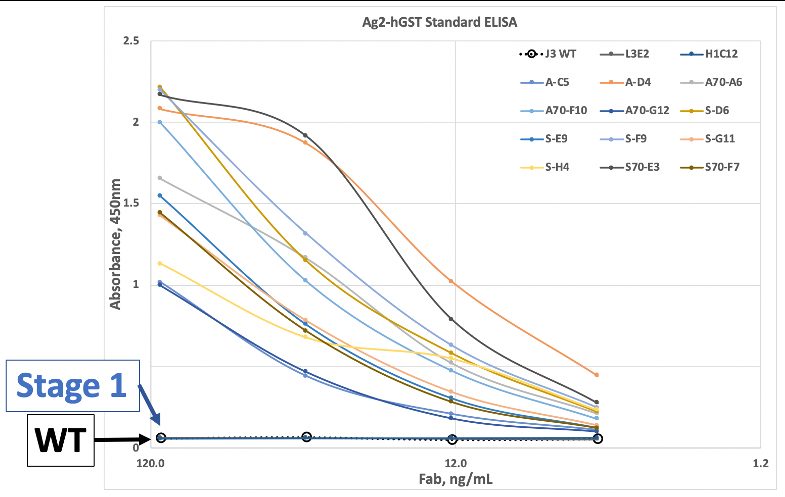
Affinity maturation ELISA — stage-by-stage improvement
Avidity engineering: monovalent Fab vs bivalent pseudo-IgG
Humanization capability and experience
Humanization, potency & developability optimization with STEM™
Developability assessment and improvement
Post-humanization STEM™: potency, developability & pH sensitivity
Not sure which service fits?
Send us your target or your sequence. A scientist — not a sales rep — will tell you the fastest route to the antibody you need, and quote it.
Request a Quote
Order through scientist.com
Abwiz Bio is a registered scientist.com supplier. If your organization procures research services through scientist.com, you can request any service on this page inside your existing approved workflow — no new vendor setup needed.